

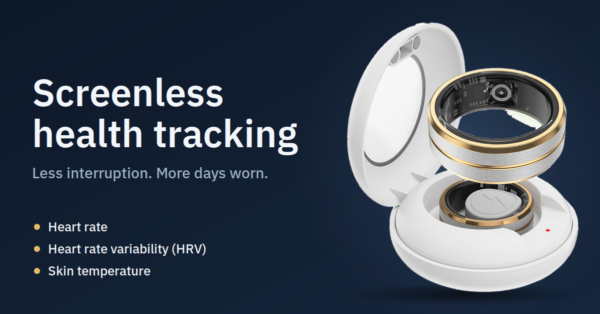
After years in wearables field, I got one observation: the best health device is the one people forget they’re wearing.
Screens create friction. Every notification, glowing display and prompt to “check your stats” competes for attention. Users start to feel watched by their own device, and many quietly stop wearing it. A smart ring removes that friction. No screen, no buzz, no social signal on your wrist. It just measures.
Two advantages stand out:
1. Privacy by design. A ring doesn’t announce itself in meetings, at dinner or in the gym. Users feel more comfortable wearing it 24/7, including during sleep, when the most valuable data is collected.
2. Effortless wear. Lightweight, comfortable and low-maintenance, a ring fits into daily life without a routine change. Longer wear time means more complete data, and more complete data means better insights.
For brands, this is the real metric: consistent wear drives daily active use. The tracking needs to be accurate, too. A well-engineered ring should deliver reliable heart rate, HRV and skin temperature trends, because HRV and temperature baselines only mean something when sensor quality and algorithms hold up over weeks, not hours.
That’s where we focus: stable PPG sensing, precise temperature measurement and tuned algorithms that keep the experience quiet while the data stays solid.
If you’re building a health-focused wearable line and exploring the ring format, I’m happy to share what we’ve learned. Feel free to message me.
#SmartRing #Wearables #HealthTech #HRV #DigitalHealth #SleepTracking #OEM