

One of the most common compliance mistakes I see from importers isn’t in the hardware — it’s in the marketing copy. Waterproof claims on smart watches are a legal minefield if you don’t understand what’s actually being tested.
Here’s the distinction that matters:
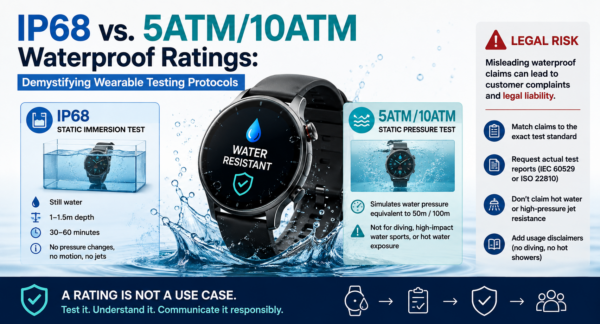
IP68 is a static test. The device is submerged in still water at a fixed depth (usually 1-1.5m) for a set duration (30-60 min). It tells you nothing about pressure changes, water jets, or motion — because there is none in the test.
5ATM / 10ATM ratings come from a different standard (ISO 22810) and simulate static water pressure equivalent to 50m or 100m depth. Important caveat: ATM ratings are also conducted in controlled, static lab conditions — they do NOT certify the watch for diving, high-impact water sports, or hot water exposure (thermal shock affects seals).
The legal risk: many importers see “5ATM” and market the product as “swim-ready” or “shower-safe under any condition.” If a customer’s watch fails during actual swimming or surfing and files a complaint, that marketing language — not the rating itself — becomes the liability.
What I always tell my buyers:
✅ Match your marketing claims to the exact test standard your supplier used
✅ Ask for the actual test report (IEC 60529 for IP, ISO 22810 for ATM), not just a spec sheet number
✅ Never claim “hot water” or “high-pressure jet” resistance unless separately tested
✅ Add usage disclaimers (no diving, no hot showers) in your product manual to limit liability
A watch’s waterproof rating is only as trustworthy as the test report behind it. If you’re an importer, always request raw test data before greenlighting your product listing copy.
How are you verifying waterproof compliance across your current product line? Let’s discuss in the comments.
#SmartWatch #Wearables #ProductCompliance #IP68 #Waterproofing #ConsumerElectronics #QualityControl #ImportExport