

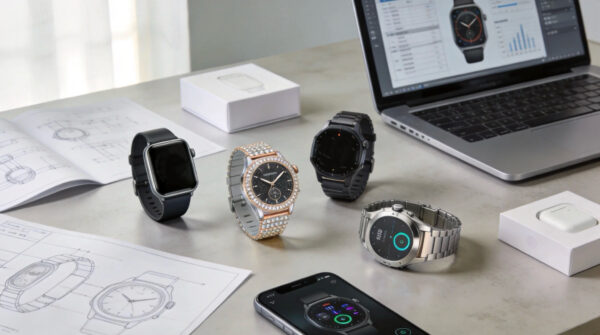
After years of working with brands, distributors and retailers, I’ve noticed that OEM smartwatch requests are becoming much more specific.
The most common one?
“Can you make it look different?”
Buyers don’t simply want another Apple-style smartwatch. They want a design that gives their brand its own identity — whether that means a slimmer body, a jewelry-inspired look, a larger AMOLED display, or a more premium strap and case.
The second request is customization without huge MOQs.
Many brands want to test the market before committing to thousands of units. They ask about small trial orders, logo customization, packaging and software branding — while keeping the initial investment under control.
The third is better hardware without pushing the retail price too high.
AMOLED, Bluetooth calling, GPS, better sensors and longer battery life are increasingly expected, but buyers still need healthy margins.
And finally, there is one request that sounds simple but matters a lot:
“Can you make sure the product is stable?”
For OEM projects, hardware is only half the job. App stability, firmware, production consistency and after-sales support often determine whether a product can scale.
That’s what I’ve learned: successful OEM isn’t about adding the most features. It’s about finding the right balance between design, functionality, cost and reliability.
#Smartwatch #OEM #ODM #WearableTechnology #SmartWearables #ConsumerElectronics