

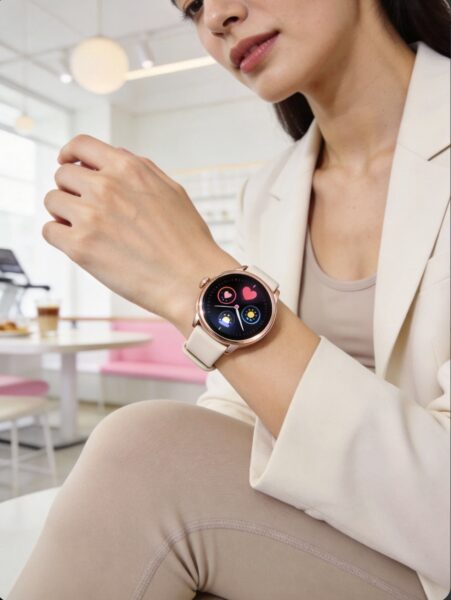
Beyond tracking activity, sleep and heart rate, it should feel personal through slim styling, custom straps and intuitive app experiences.
The best products are not simply smaller watches—they are wearable accessories users truly want to wear every day.
After working with wearable buyers across different markets, I’ve learned that a successful women’s smartwatch is not simply a smaller version of a men’s model.
First, design must feel personal. A slim case, balanced proportions, comfortable strap options, and colours that work with both sportswear and daily outfits matter greatly. Many users wear a smartwatch from morning to night, so it needs to look like an accessory—not just a piece of electronics.
Second, comfort is essential. Lightweight construction, skin-friendly materials, an easy-to-wear strap, and a form factor suitable for sleep tracking can strongly influence repeat use and customer reviews.
Third, the feature set must be practical. Women often value health and wellness functions such as sleep tracking, heart-rate monitoring, stress insights, activity tracking, menstrual-cycle support, and workout modes. However, more features do not always create more value. Clear data presentation and a stable, intuitive app experience are equally important.
Finally, brands should offer choice. Replaceable straps, multiple finishes, customised watch faces, and private-label packaging help retailers create a collection rather than sell a single device.
The winning women’s smartwatch combines technology with comfort, style, and meaningful everyday wellness value. For brands, the opportunity is not just to launch “a women’s version,” but to build a wearable users genuinely want to keep wearing.
#Smartwatch #WearableTech #WomensWearables #SmartWearables #HealthTech #ConsumerElectronics #OEM #ODM #PrivateLabel