

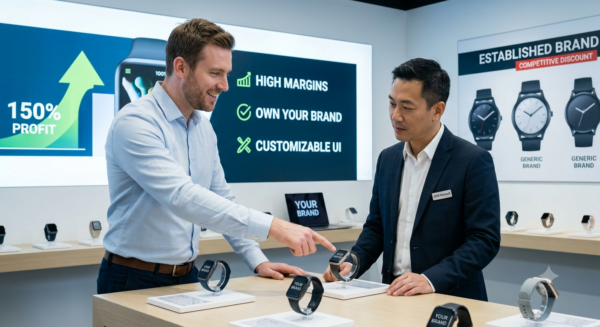
Smartwatch Retail Strategy: Private Label vs. Selling Established Brands
As a retailer, distributor, or growing brand, you face a critical decision when entering the wearable market: Do you play it safe by selling established name brands, or do you take control by launching your own private label smartwatch line?
Both routes offer distinct advantages, but they lead to entirely different long-term business outcomes. Here is the honest comparison to help you choose the right retail strategy.
Selling Established Brands — The Low-Barrier Route
Selling household-name brands is often the default choice for retailers. It feels safe because the marketing has already been done for you. However, it comes with significant long-term trade-offs.
What you gain: instant trust and lower upfront marketing costs
When you stock an established brand, you don’t have to convince customers that the product works. The brand equity is already there. You benefit from instant consumer trust and a lower upfront cost, as you don’t need to invest in product design, certification, or brand awareness campaigns.
What you lose: thin margins, price wars, and zero brand equity
The biggest challenge with established brands is the lack of control. Because everyone else can sell the same products, you are forced into a price war. Your profit margins are often capped, and you have zero control over the brand’s future direction or pricing strategy. You are a reseller, not a brand owner.
Ready to skip the price war?
We supply ready-to-brand smartwatches with low MOQ, custom logo, and packaging — so you can test your private label without heavy upfront investment.
Launching Your Own Private Label — The High-Reward Route
Choosing the private label route means you are building an asset, not just moving inventory. While it requires a bit more initial planning, the long-term rewards are substantial.
Margin advantage: 100%–150% retail margins vs. under 15% for branded goods
This is the most compelling reason to go private label. While standard retail margins for established brands often hover under 15%, owning your own brand allows you to set your own retail price. A well-sourced private label smartwatch can easily achieve 100% to 150% retail margins, giving you the cash flow to reinvest in marketing and business growth.
Market defense: how owning your brand blocks copycat competitors
When you sell a private label, you control the distribution. You dictate who can and cannot sell your product. This creates a natural defense against copycat competitors and protects your market share.
Ecosystem freedom: pivoting from AMOLED screens to smart rings under one brand
When you own the brand, you are not locked into a single product line. You can start with smartwatches, and later easily expand into smart rings, fitness bands, or AI glasses under the same brand umbrella. This ecosystem freedom allows you to grow with your customers’ needs and expand your product catalog seamlessly.
Which Route Fits Your Business Right Now?
Neither path is inherently wrong—it depends on your current business model and long-term goals.
- Choose established brands if: You have a high-volume, fast-turnover retail model and lack the internal resources to manage product sourcing, branding, and basic UI localization.
- Choose a private label if: You want to escape the race to the bottom on price, build a recognizable brand, and have the vision to capture higher margins. With today’s flexible manufacturing partners (like us), you don’t need to order tens of thousands of units to start.
Stop fighting for crumbs. Own your brand.
Whether you are comparing private label vs. established brands for the first time, or ready to launch your own wearable line this quarter, we can help you start with just 1–2 samples to test the waters.